The Unapologetic Edge: Why Savage City Is Reshaping Modern Brand Identity
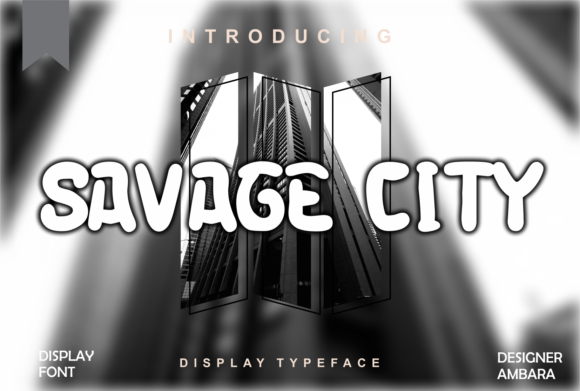
In an era where digital attention spans are shrinking and visual noise is at an all-time high, the demand for typography that commands immediate respect has never been greater. Designers and brand strategists are moving away from the safe, sanitized aesthetics of the early 2010s toward typefaces that convey raw emotion, texture, and distinct personality. At the forefront of this shift is Savage City, a cool display font featuring unique characters and an exquisite, wild vibe. This typeface is not merely a collection of glyphs; it is a statement piece designed for titles, covers, banners, posters, or other bold designs that need impressive typography.
For professionals, creators, entrepreneurs, marketers, freelancers, and enthusiasts, understanding the strategic application of fonts like Savage City is no longer optional—it is essential. As we navigate a market saturated with generic templates and AI-generated uniformity, the ability to inject "wild" authenticity into a brand’s visual language becomes a competitive advantage. This article explores how Savage City fits into broader industry trends, why it is gaining traction among top-tier creatives, and how leveraging its unique characteristics can elevate your design workflow and business outcomes.
Beyond Aesthetics: The Psychology of "Savage" Typography
To understand the relevance of Savage City, one must first look at the psychological impact of display fonts in consumer psychology. Display typography serves as the hook—the first point of contact between a brand and its audience. While body text informs, display text persuades. It sets the tone before a single word is read. The "exquisite, wild vibe" offered by Savage City taps into a growing consumer desire for authenticity and unfiltered expression. In a marketplace often criticized for being overly polished and corporate, there is a palpable hunger for brands that feel human, gritty, and real.
Savage City delivers this through its unique character set. Unlike standard sans-serif or serif fonts that prioritize legibility above all else, display fonts prioritize attitude. The irregularities, the sharp angles, and the distinctive shapes within Savage City create a sense of movement and energy. For a freelancer pitching a creative agency or a marketer launching a limited-edition product drop, this font communicates confidence. It suggests that the brand behind it is not afraid to stand out. This aligns with the broader trend of "anti-design," where breaking traditional rules of balance and symmetry creates a memorable visual footprint. By using Savage City for headlines and cover art, designers signal that their work is crafted, intentional, and bold.
Aligning with the Experience Economy
The rise of Savage City is closely tied to the evolution of the experience economy. Consumers today do not just buy products; they buy into narratives, lifestyles, and cultural movements. Whether it is a streetwear label, a craft beverage company, or a tech startup disrupting a legacy industry, the visual identity must reflect the core values of the community it serves. Savage City’s "cool" factor makes it particularly effective in industries where edge and innovation are key selling points.
Consider the music festival industry, where posters and digital banners must capture the electric atmosphere of the event within seconds. A traditional, clean font might fail to convey the intensity of the lineup. In contrast, Savage City’s wild aesthetic mirrors the chaos and excitement of live events. Similarly, in the realm of esports and gaming, where branding is hyper-competitive, Savage City provides the necessary visual weight to compete on global stages. Its unique characters allow for custom logo treatments and dynamic layouts that standard fonts cannot achieve without extensive modification.
For entrepreneurs and small business owners, this means that typography is a direct reflection of brand positioning. Choosing Savage City over a more conventional option is a strategic decision that says, "We are different." It appeals to consumers who value uniqueness and are willing to pay a premium for experiences that feel exclusive and carefully curated. This is particularly relevant for lifestyle brands targeting Gen Z and Millennials, demographics that prioritize individuality and are quick to reject anything that feels mass-produced or soulless.
Practical Applications in Digital and Print Workflows
While the artistic merits of Savage City are clear, its practical utility in modern design workflows is what ensures its longevity. With the proliferation of remote work and digital-first marketing, creatives need tools that are versatile across mediums. Savage City excels in both print and digital environments, offering a robust solution for diverse project requirements.
- Cover Art and Publishing: For authors, podcasters, and digital publishers, the cover is the storefront. Savage City’s imposing presence ensures that book covers, album art, and podcast thumbnails stand out in crowded online marketplaces. The font’s readability at large sizes, combined with its stylistic flair, makes it ideal for conveying genre and mood instantly.
- Social Media Banners and Stories: In the fast-scrolling world of Instagram and TikTok, static images must grab attention immediately. Savage City works exceptionally well for overlay text on video backgrounds or static story graphics. Its unique characters add a layer of visual interest that breaks up the monotony of square-format feeds.
- Event Posters and Merchandise: For freelancers designing merchandise for bands, gyms, or local businesses, Savage City offers a timeless yet contemporary look. T-shirts, hoodies, and tote bags printed with Savage City typography often perform better because the font itself acts as a graphic element, reducing the need for complex illustrations.
- Digital Advertising: In programmatic advertising and banner ads, space is limited. Savage City allows designers to communicate a message with fewer words. The font’s bold nature means that even short headlines carry significant weight, improving click-through rates by reducing cognitive load and increasing visual impact.
Addressing Changing Creative Expectations
The creative industry is undergoing a significant transformation driven by technology and changing client expectations. Clients no longer want generic templates; they want bespoke solutions that tell a specific story. This shift places a higher premium on designers who can select and adapt typography to fit unique brand voices. Savage City supports this demand by offering a level of customization that encourages creativity. Designers can play with kerning, tracking, and color to further enhance the font’s wild vibe, creating custom logotypes that are difficult to replicate.
Moreover, the integration of AI in design tools has raised concerns about homogenization. As AI models generate millions of variations of standard fonts, the value of human-curated, character-rich typefaces increases. Savage City represents the human touch—the quirks, the imperfections, and the artistic intent that algorithms struggle to mimic. For professionals, this means that investing in high-quality, distinctive fonts like Savage City is an investment in differentiation. It is a way to assert human creativity in an increasingly automated landscape.
Strategic Implementation for Maximum Impact
To leverage Savage City effectively, professionals must approach it with strategic intent. It is a display font, meaning it is best used sparingly and in context. Overusing it in body text will lead to fatigue and reduced readability. Instead, reserve Savage City for key moments of impact: main headlines, section dividers, call-to-action buttons, and logo marks. Pairing it with a clean, neutral sans-serif for body copy can create a striking contrast that enhances both aesthetics and usability.
Furthermore, consider the cultural context of your audience. Savage City’s "savage" and "wild" connotations may not be suitable for every industry. Financial institutions, healthcare providers, and legal firms may find the font too aggressive for their brand voice. However, for creative agencies, entertainment companies, fitness brands, and lifestyle startups, it is a perfect match. Understanding these nuances is crucial for maintaining brand integrity while pushing creative boundaries.
Conclusion: Embracing the Bold Future of Design
The success of Savage City is a testament to the enduring power of typography to shape perception and drive engagement. It is more than just a font; it is a tool for storytelling, a vehicle for brand expression, and a response to the growing demand for authentic, impactful design. As professionals and creators continue to navigate a complex and competitive market, the ability to choose and apply typefaces that resonate emotionally will remain a critical skill.
By embracing the unique characters and exquisite vibe of Savage City, designers and businesses can break through the clutter and connect with audiences on a deeper level. Whether you are designing a poster for a local event, crafting a campaign for a global brand, or simply updating your personal portfolio, Savage City offers the boldness and impressiveness needed to leave a lasting impression. In a world that is constantly shouting, sometimes the most powerful thing you can do is speak with style, substance, and a little bit of wildness.
As you plan your next design project, consider how Savage City can transform your visual narrative. Explore its potential for titles, covers, and banners, and discover how its distinctive character can elevate your work from ordinary to extraordinary. The future of design is bold, and Savage City is leading the charge.