Monoton Line: The Bold Choice for Creators Who Need Impact
In a digital landscape saturated with generic templates and forgettable designs, standing out often comes down to a single decision: the typography. You don't always need complex illustrations or expensive photography to grab attention; sometimes, you just need a font that refuses to be ignored. This is where Monoton Line steps in as a practical solution for anyone looking to elevate their visual communication without overcomplicating the process.
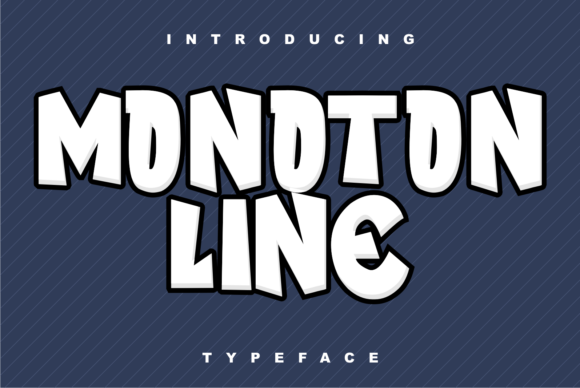
Monoton Line is a thick-lettered and cool display font designed to deliver a simple yet powerful message. It isn't trying to mimic handwriting or offer delicate elegance. Instead, it focuses on a strong visual effect that instantly makes your creations more appealing than any others. Whether you are a freelancer pitching a new brand identity or a small business owner updating your social media graphics, understanding how to leverage this typeface can transform the way your audience perceives your work.
Why Thick Lettering Matters in Modern Design
The average user scans content rather than reading it word-for-word. In that split second of attention, a thin, intricate font might get lost against a busy background or simply fail to register. Monoton Line solves this by prioritizing legibility and presence. Its heavy strokes create a silhouette that commands space, ensuring that headlines, logos, or key messages cut through the noise.
This isn't just about making things "big." It's about psychological impact. When people see bold, structured lettering, they subconsciously associate it with confidence and stability. For entrepreneurs and marketers, this translates directly into trust. A thick, well-proportioned font suggests that the brand behind it is established and reliable. Conversely, using delicate fonts for a construction company or a tech startup might send mixed signals. Monoton Line aligns perfectly with industries that value strength, clarity, and directness.
Real-World Applications for Professionals
To truly understand the value of Monoton Line, we have to look at where it fits into actual workflows. Let's move away from abstract theory and look at specific scenarios where this font changes the outcome of a project.
- For Social Media Managers: Consider a campaign for a summer sale or a product launch. Instagram feeds are crowded, and users scroll quickly. A post featuring a standard sans-serif headline might blend in with the feed. However, a graphic utilizing Monoton Line creates a focal point. The thick letters act as an anchor, stopping the scroll. When combined with high-contrast colors, the font ensures the call-to-action is impossible to miss, driving higher engagement rates.
- For Freelance Graphic Designers: Clients often ask for something "modern" but struggle to define what that means. Offering a design that incorporates Monoton Line provides an immediate sense of contemporary style. It works exceptionally well for logo design, particularly for brands in the fitness, automotive, or streetwear sectors. The font's geometric yet friendly nature allows designers to build custom marks that feel unique without requiring hours of vector manipulation.
- For Educators and Content Creators: If you are creating educational materials, presentations, or YouTube thumbnails, clarity is king. Students and viewers need to grasp concepts quickly. Using Monoton Line for slide headers or video titles helps break information into digestible chunks. It reduces cognitive load by highlighting the most important parts of the content, making learning more effective.
Bridging Personal Projects and Commercial Goals
The versatility of Monoton Line extends beyond corporate branding. It is equally at home in personal lifestyle projects, hobbyist endeavors, and community initiatives. The beauty of this font lies in its ability to adapt to different tones while maintaining its core character.
Imagine you are organizing a local event, like a charity run or a community workshop. You need flyers, banners, and digital invitations. A handwritten script might feel too casual or hard to read from a distance. Monoton Line strikes the perfect balance. It feels energetic and inviting but remains professional enough to convey seriousness. The thick strokes ensure that details like dates and locations are readable even when printed on smaller paper sizes or viewed on mobile screens.
Similarly, bloggers and publishers looking to refresh their websites will find that Monoton Line offers a fresh alternative to the ubiquitous Helvetica or Arial. It adds personality to blog headers and pull quotes without sacrificing readability. By breaking up long blocks of text with bold headings, you guide the reader's eye naturally through the article, improving the overall user experience.
When to Choose (and When to Avoid) Monoton Line
While Monoton Line is a powerful tool, it is not a magic wand for every situation. Understanding its limitations is just as important as knowing its strengths. Because it is a display font, it is designed for short bursts of text—headlines, logos, posters, and captions. It is generally not suitable for body copy or long-form articles where readability over extended periods is crucial.
If you are designing a legal document, a medical report, or a novel, you should steer clear of Monoton Line. The heavy weight and stylized nature can make dense text difficult to scan and may appear unprofessional in formal contexts. The goal is to match the font to the medium. Use it when you want to shout, inspire, or highlight. Avoid it when you need to whisper, explain, or inform in detail.
Another consideration is pairing. Since Monoton Line is so dominant, it requires careful balancing. Pairing it with a clean, lightweight sans-serif for body text often yields the best results. This contrast creates a dynamic rhythm in your design, allowing the bold font to take center stage while the supporting text remains invisible to the eye, doing its job quietly.
Maximizing Value Before You Download
Before integrating Monoton Line into your toolkit, there are practical steps to consider to ensure you get the most out of it. First, verify the licensing terms. As a creator, whether you are a solo entrepreneur or part of a larger agency, understanding how you can legally use the font is essential. Some licenses cover personal use only, while others allow commercial application. Always check the specific terms associated with your download to avoid future legal complications.
Secondly, test the font across different mediums. A font that looks stunning on a 4K monitor might lose its crisp edges when scaled down for a mobile app icon or printed on a textured fabric. Preview Monoton Line in various sizes and formats before committing to a full rebrand or a large-scale print run. This due diligence saves time and resources in the long run.
Finally, think about accessibility. While bold fonts are generally easier to read, ensure that the color contrast between the text and the background meets accessibility standards. High contrast is vital for users with visual impairments. Monoton Line's thick lines provide a great foundation for accessibility, but the color choices around them must support inclusivity.
Conclusion: A Tool for Clear Communication
Ultimately, typography is a form of communication. Monoton Line is a tool designed to speak loudly and clearly. It cuts through the clutter of modern life, offering a straightforward solution for creators who want their work to be seen and remembered. By focusing on real-world applications—from social media campaigns to community events—you can harness the power of this thick-lettered font to achieve tangible results.
Whether you are building a brand, teaching a class, or simply expressing yourself creatively, the right font can make all the difference. Monoton Line offers that edge, turning ordinary designs into memorable experiences. Start experimenting with it today, keep your audience in mind, and watch your projects come alive with the strong visual effect that only this typeface can provide.